

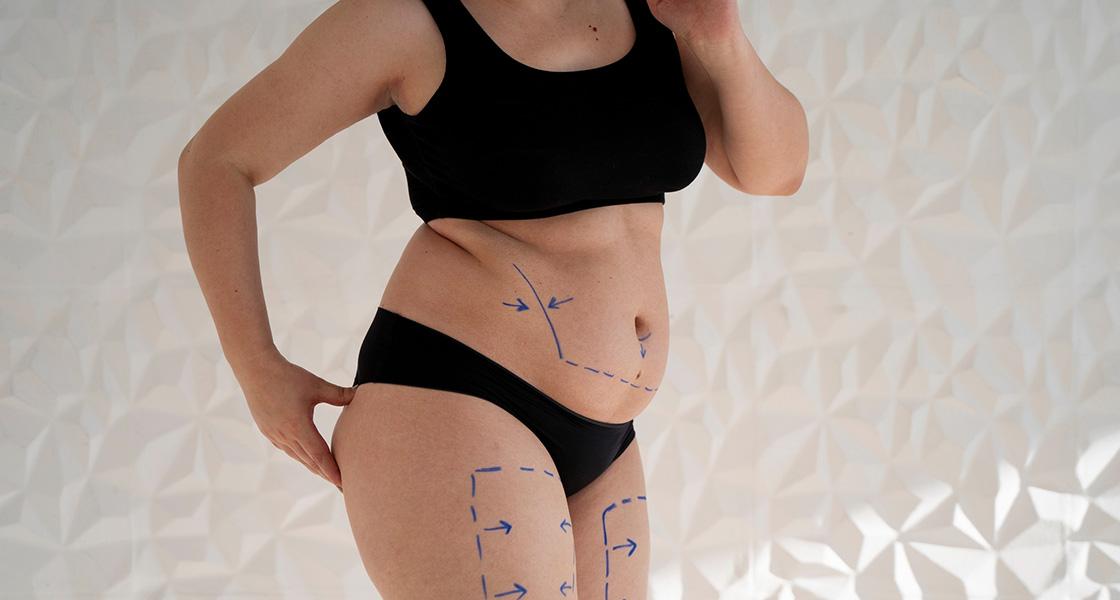
Liposuction / Liposculpture
Liposuction / Liposculpture
Duration
1.5-3 hour(s)
Hospitalisation
1 night(s)

Hotel
5 night(s)
Duration
1.5-3 hour(s)
Hospitalisation
1 night(s)
Hotel
5 night(s)
Liposuction, sometimes called liposculpture, is a surgical treatment designed to reduce stubborn pockets of fat and improve body contours. It is most effective for reshaping specific areas that have not responded to diet and exercise, rather than as a method of weight loss. When planned carefully and performed on the right candidate, it can create a more balanced silhouette with small, discreet scars.
What liposuction is designed to achieve
Liposuction removes a portion of fat cells from targeted areas using a fine tube (cannula) and controlled suction. Because fat cells are physically removed, the treated area can become slimmer and better defined. However, overall body weight can still change after surgery, and remaining fat cells can enlarge if weight is gained.
Liposuction is often chosen to:
- Improve proportions, definition, or symmetry
- Reduce localised fat deposits that persist despite a healthy lifestyle
- Refine contours in areas such as the abdomen, waist, hips, thighs, knees, upper arms, chin and neck, and in some men, the chest
It is important to know that liposuction does not treat the underlying causes of cellulite and does not reliably tighten significantly loose skin. In some cases, it can modestly improve the appearance of cellulite, but this cannot be guaranteed.
Who may be a good candidate, and who may not
Liposuction tends to suit people who are generally healthy, close to a stable target weight, and bothered by localised fat deposits. Results are usually best when skin elasticity is good, as the skin needs to contract smoothly over the new contour.
You may be suitable if you:
- Have localised fat pockets that do not respond to exercise and nutrition
- Are at a stable weight and not seeking major weight reduction
- Have good skin tone and realistic expectations
- Do not smoke, or are able to stop before and after surgery as advised
Liposuction may be less suitable, or may need to be combined with another procedure, if you:
- Have significant loose skin or muscle separation (for example after pregnancy or major weight loss)
- Have a higher body mass index where overall weight management is the priority
- Have certain medical conditions that increase surgical risk (such as clotting disorders or poorly controlled high blood pressure)
In these situations, alternatives such as abdominoplasty (tummy tuck), body lift procedures, or a staged approach may be more appropriate.
Assessment and planning at our clinic
A thorough pre-operative assessment is essential because the best approach depends on your anatomy, skin quality, fat distribution, and goals.
During your consultation, our plastic surgery team will:
- Discuss what bothers you and what you would like to change
- Examine the areas you are considering and assess skin elasticity
- Explain what liposuction can and cannot achieve for your body type
- Recommend the safest, most suitable technique and whether any combination procedure should be considered
- Review your medical history, medications, allergies, and smoking status
- Talk through recovery timelines, likely results, and potential risks
Photographs and measurements may be taken for planning and to help set realistic expectations. If you decide to proceed, you will receive clear pre-operative instructions tailored to your health and treatment plan.
How the procedure is generally performed
Liposuction is usually performed under general anaesthesia or, in selected cases, with sedation and local anaesthetic. The exact choice depends on the areas treated and the expected volume.
On the day of surgery:
- Small incisions are made in natural creases or less visible areas
- A fluid containing saline and local anaesthetic is often introduced into the treatment area (commonly called tumescent solution) to help reduce bleeding and make fat removal smoother
- A thin cannula is inserted through the small incisions and fat is removed in a controlled, even manner to shape the area
- Incisions are closed with fine stitches or allowed to heal with minimal closure, depending on location and technique
- A compression garment or supportive dressing is applied to help control swelling and support the new contour
The procedure length varies widely depending on how many areas are treated.
Areas commonly treated
Liposuction can be used on many parts of the body. Commonly treated areas include:
- Abdomen and waist
- Hips (love handles)
- Outer thighs and inner thighs
- Knees (especially inner knees)
- Upper arms
- Chin and neck (double chin)
- Back (for example around the bra line)
- Male chest (when fatty tissue is a major component)
If glandular tissue is a significant contributor to enlarged male breasts (gynaecomastia), liposuction alone may not be enough and surgical removal of gland tissue may be recommended.
Recovery and what to expect over time
Swelling, bruising, tenderness, and temporary numbness are common after liposuction. These effects usually improve steadily over the first few weeks.
Typical recovery milestones include:
- First few days: swelling and bruising often peak; discomfort can feel similar to deep muscle soreness
- 1 to 2 weeks: many people feel noticeably more comfortable; light activity and walking are encouraged
- 3 to 6 weeks: swelling continues to reduce; gradual return to exercise is usually possible depending on the extent of surgery
- 3 to 6 months: the contour becomes more refined as swelling settles and tissues soften
Compression garments are usually recommended for several weeks. They help reduce swelling, support healing, and can lower the risk of contour irregularities.
Some people notice firmness, lumpiness, or uneven texture during healing. This is often part of normal scar tissue formation under the skin and typically softens over time. In selected cases, lymphatic drainage or specialist massage may be recommended as part of aftercare.
Results and long-term maintenance
You may see an early change soon after surgery, but the final result takes time. Most people see a clearer outcome once swelling has settled, often over 3 to 6 months.
Because fat cells are removed, the treated area can remain slimmer long term, especially if your weight stays stable. If weight is gained, it can still accumulate in untreated areas and to a lesser extent in treated areas.
Liposuction is best viewed as contouring rather than a substitute for healthy habits. Maintaining results typically involves:
- Keeping weight stable
- Regular physical activity
- Balanced nutrition
Risks, limitations, and important considerations
Liposuction is a surgical procedure and carries risks. While serious complications are uncommon in appropriately selected patients, it is important to understand potential issues.
Possible risks and side effects include:
- Bruising, swelling, and pain
- Temporary numbness or altered sensation
- Infection
- Bleeding or fluid collections
- Blood clots (deep vein thrombosis), particularly with larger-volume procedures or limited mobility
- Contour irregularities, asymmetry, or waviness
- Skin laxity if skin elasticity is limited
- Scarring, usually small and discreet but variable between individuals
Liposuction does not reliably remove cellulite and cannot guarantee perfectly smooth contours. In some cases, a revision procedure may be considered if significant irregularity persists after full healing.
Your individual risk profile depends on factors such as the areas treated, the amount of fat removed, your medical history, and lifestyle factors including smoking.
Preparing safely for surgery
You will be given personalised instructions, but common preparation steps include:
- Sharing a complete list of medications and supplements
- Avoiding certain medicines that can increase bleeding risk, if advised
- Stopping smoking before and after surgery to support healing
- Avoiding alcohol around the time of surgery, if advised
- Arranging time off work and help at home for the first few days
Always follow the plan provided by your surgeon and nursing team, as preparation is tailored to your procedure and health.
Your consultation, follow-up, and ongoing support
Care does not end when the procedure is finished. At our clinic, you will be supported through each stage, from assessment and planning to recovery and longer-term follow-up.
Your care pathway typically includes:
- A detailed consultation focused on your goals and suitability
- A clear treatment plan with realistic outcomes and recovery expectations
- Post-operative reviews to monitor healing, garment use, and progress
- Guidance on activity, scar care, and when to return to exercise
If you have concerns during recovery, our medical team is available to advise you promptly. The aim is a safe experience, a well-supported recovery, and a result that looks natural and proportionate to your body.